
What you learned in week one.Missing by week six.
You see the real problem in the first two meetings. By the time the work starts it lives in your notebook and nowhere else, and the client pays you to find it twice. Keep it on the client record the engagement runs from.
You see the real problem in the first two meetings. By the time the work starts it lives in your notebook and nowhere else, and the client pays you to find it twice.
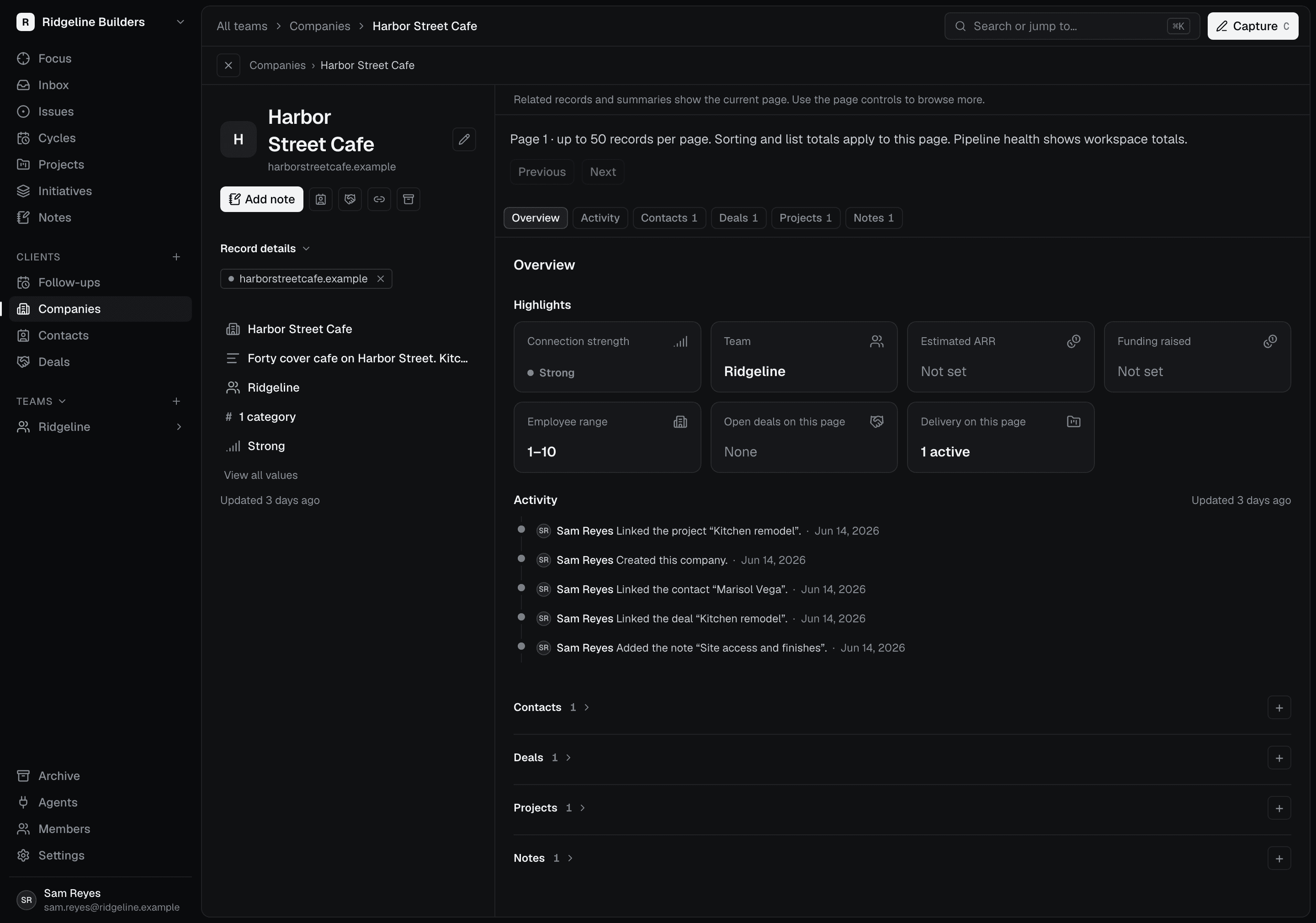
The first meetings stop evaporating.
Write what you observed and who you met straight onto the company record. Favorite the notes you keep reopening, so the detail behind your recommendation is still there months later.
The scope becomes work someone owns.
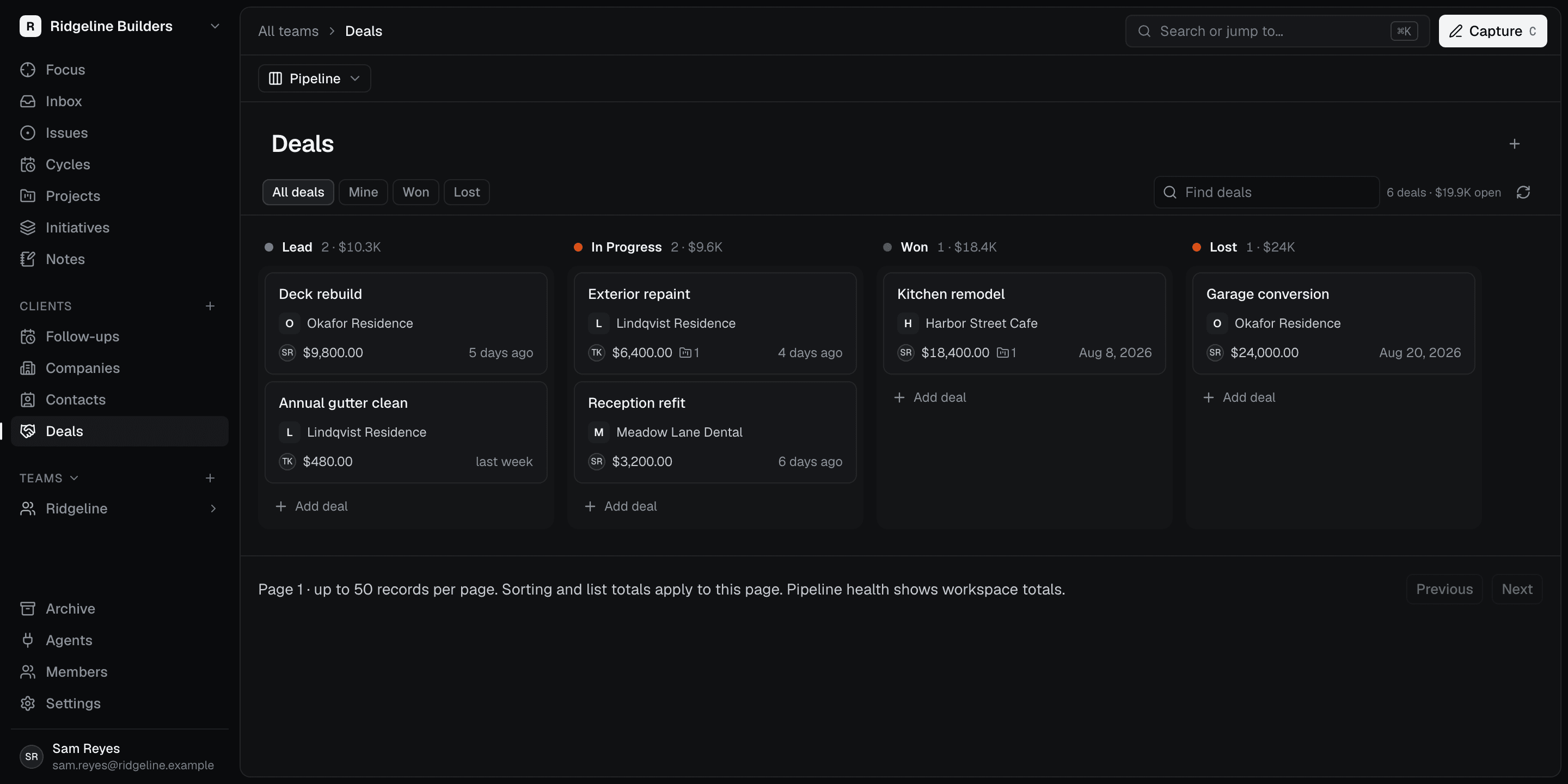
Track the proposed engagement on the board. When the client approves, create the linked project and turn the agreed scope into issues with owners and a status you can point at.
The next engagement starts ahead.
Reopen the company page before you scope again and read the past projects, notes, and decisions. Clients notice when you remember; that is what gets a small firm called back.
Plan and track projects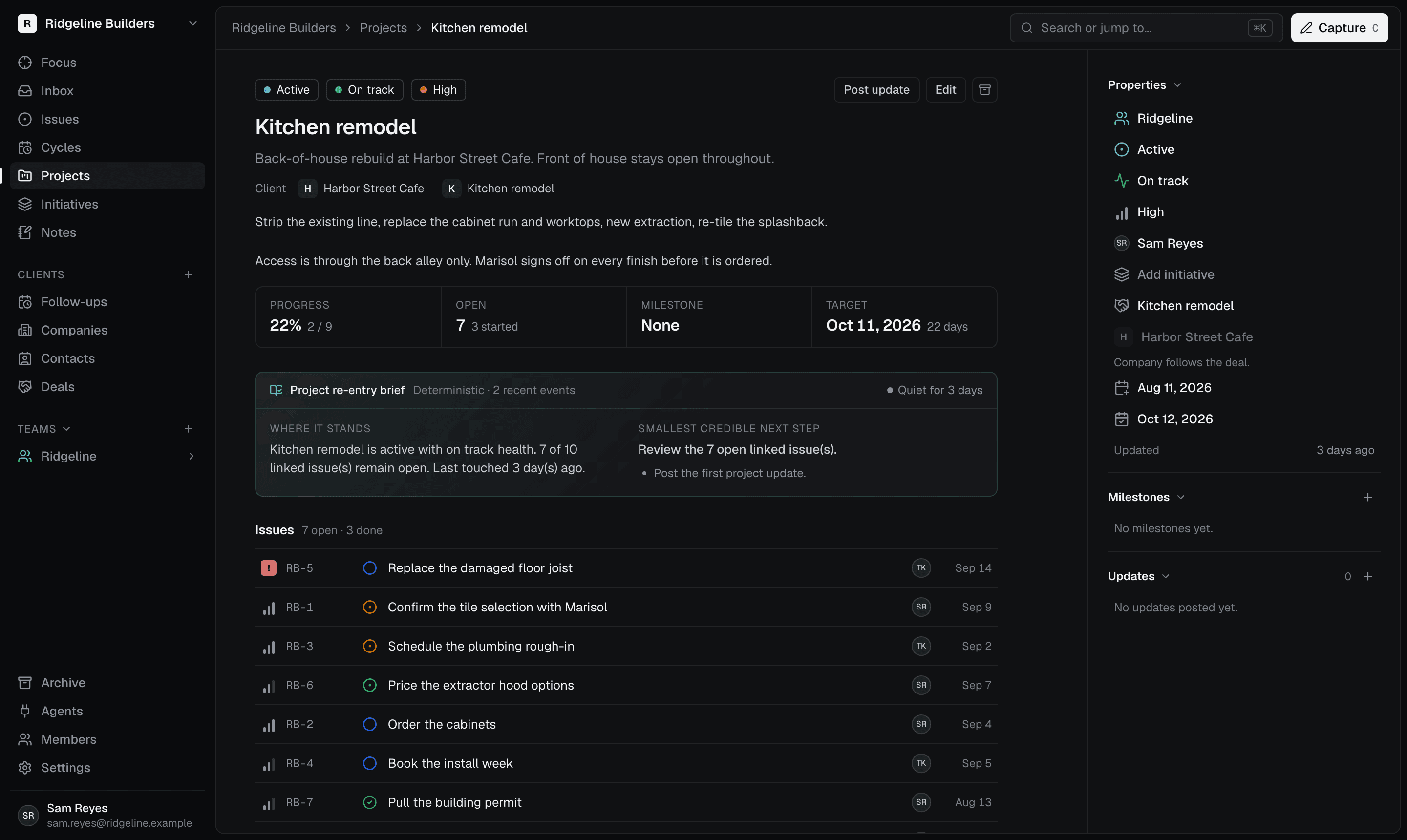
From first meetings to a working plan.
Illustrative example: a small consultancy hired to fix a slow intake process.
Record what you observed and who you met on the client’s company page.
Track the proposed engagement as a deal, then create the project when it is approved.
Turn the research, the recommendations, and the follow-up into issues with owners.